
Rot, Rats, and Promises
A Childhood Inside a House That Was Already Rotting

The smell of a rotting corpse is the smell of my childhood.
A sentence far more wicked than it has any right to be. It sits there calmly, hands folded, pretending to be literature when it is simply a fact.
When I was eight, my parents entered another rough patch in their marriage. This time, my father held the stronger cards. His ultimatum was simple: move closer to his family, or divorce. My mother complied. Just before Christmas, I said goodbye to my best friend Kristi, to the small village of Soviet apartment blocks that leaned into each other like tired old men, and we began our pilgrimage toward what was advertised as a new beginning.
There were not many houses available in that stretch of nowhere. But fortune, in its particular sense of humour, presented us with one. A family was being evicted for not paying their loan. They owned a farm nearby. We bought it the moment their contract ended, at a good price. Quite a lot of land. A big farmhouse. A barn for animals. A barn for hay. A tiny building that housed the water system. A garage. A shed. A large apple orchard. On paper, it was pastoral poetry.
Access took time, so we stayed at my grandmother’s house. She owned a building with four apartments. One for her. One for whichever relative needed refuge at the moment. There was always someone. One was dedicated to an enormous amount of junk. The last one was occupied by chickens.
While living there, I conducted small experiments, such as discovering what happens if you rub salt into an open wound. I also watched, in secret, the Home episode of The X-Files, the one with the inbred family. It rearranged my nervous system. For weeks, I stood at the window scanning the road, convinced their car would appear at any moment. Childhood fears rarely need logic. They just need space.
With the start of summer, we finally gained access to our farm. It arrived with a spectacle. Police escorted the previous owners out. There was shouting. Conflict. A theatrical prologue to rural life.
The fantasy of the beautiful farm ended quickly.
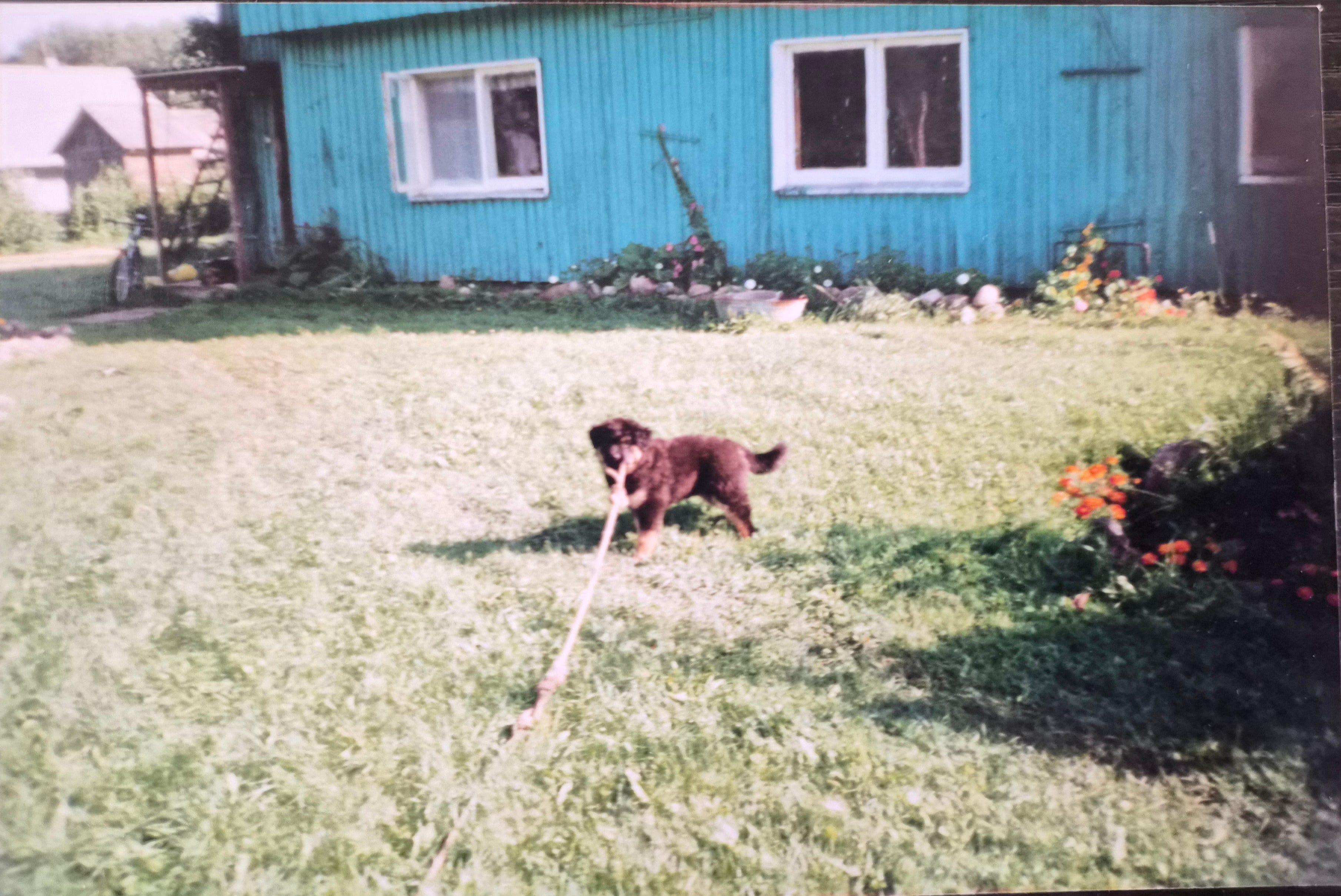
The orchard had been destroyed. Sheep had been kept inside the fenced area, chewing bark, snapping trunks, killing most of the trees. It looked less like agriculture and more like a battlefield. Some trees still stood, skeletal and confused. Some sheep lay dead among them. It was a garden curated by neglect. The scent of blooming apples had been replaced by decay.
Then the barn.
The door was sealed with a heavy lock that my father had to cut open. The moment it gave way, the air struck like a physical object. They had locked cows inside and simply left them. Rotting bodies. Years of manure. I still remember the calf most clearly. Small. Sunken into itself. Decay has a signature smell. It is sweet in a way that feels obscene, like burnt sugar mixed with something that should never be heated. It stings the eyes more than the throat. That smell never left. For all the years we lived there, I could still smell those cows inside that barn. We never truly cleaned it. It was destroyed beyond redemption.
I spent a lot of time there anyway. Sitting with animals. Dreaming about restoring it. I always lived in my head. Living there simply trained me to do it professionally.
There were more dead and decaying animals in the surrounding fields and forest. My nose adapted. It takes me a second to recognise death now. Just a small inhale, and I know something lies somewhere, ending quietly. I learned not to hate the smell. I would not wear it as perfume, but I do not recoil from it. It is like the smell of manure. If you grow up with cows, you do not gasp dramatically every time. It is just part of the contract.
The house itself was no kinder than the barn. No dead animals inside, at least. Only everything else. Filth layered into corners like sediment. The living room floor was destroyed. Wood ants colonised one wall, and I was bitten enough times to respect their sovereignty. The main fireplace was broken. Only the kitchen one worked. There was a sauna, but my father tore it down, promising to build something better. The stairs to the upper floor would go there, he said. The stairs did move. The new washroom never appeared.
He removed the entire living room floor, leaving only beams to jump across. We all moved upstairs into what had been summer rooms. Summer rooms are built for optimism, not winter. Thin walls. Fragile bones. We installed a fireplace up there. It performed modestly. The downstairs flooring was never repaired, but the space became a home. It was sealed off. The fireplace downstairs was never fixed.
I fell down the stairs once and crashed through the closed door into the gutted living room. I went through the door, jumped beam to beam until I hit the back wall. My family stared at me in shock that I had not broken anything. Another time, I slipped and grabbed onto something that saved me from a worse fall. I spent years wondering what I held onto. I never figured it out. Perhaps the house decided I had already learned enough lessons about gravity. In my defence, the stairs were steep, and my balance is unreliable.
I was lucky in one way. The small room that had once held the stairs became my room. Privacy. There, I moved from dolls to the first time I heard Hybrid Theory by Linkin Park. That album cracked something open in me. In that room, I began writing. Quietly. Secretly.
To add texture to the experience, my window broke when a rock from the grass machine struck it. A small shard went missing, creating a perfect entrance for the hornets whose nest lived somewhere inside the wall above my window. I could not turn on the light at certain times, or the room would fill with angry wings. I taped the gap. The hornets and I negotiated a treaty. They mostly stayed above. We respected each other.
There was also the lamp incident. I plugged in a lamp. It burst into flames. The wiring had been altered. I assume my father had improved it. I remember standing there holding a burning lamp, my brain lagging behind reality, before I put the fire out. The damage to our electrical system was significant. We had no power for a long time. It was October. Darkness arrived early. I spent my days splitting wood with an axe. I became quite good at it. That skill has faded, like most survival tricks you hope never to need again.
Winters were brutal. The house was thin. There were not enough fireplaces. Not enough firewood. We burned wet wood, fresh-cut wood, whatever surrendered to flame. I was always cold. Always. My one consistent wish was a warm home. I slept in my winter coat. My glass of water froze beside my bed. The house felt assembled from paper and intention.
The only creatures unbothered by winter were the rats. They entered with confidence. My mother would throw whatever she could grab at them during the night. The rats did not care. They are professionals. Once I went downstairs and found one sitting on the counter beside the radio. I turned the radio on. It did not move. Fear was not in its vocabulary.
That house altered me. I learned to live simply. I learned to live with animals, not against them. Hornets in the walls. Frogs in the well. Rats in the corners. All had their claim. We coexisted.
I learned to dream instead of complain. I built warmth in my head when I could not find it in the walls. I imagined renovations. I designed futures. I also learned not to believe words too easily. My father sold us a dream. He dismantled the house and then lost interest. We remained inside the skeleton of promises while he worked away and later invested himself elsewhere. I do not think he lied. I think he believed what he said at the time. He simply moved on from his own sentences.
My last memories there are blurred. I remember us burning a pile of old rags from the corner of a room to keep warm. Every poor household seems to have a rag corner. I was not sad to leave. I was sad that none of the dreams had materialised.
The house broke my mother in ways that were quiet but permanent. Food was scarce. The cold was relentless. She carried the weight. We tried to help, but it did not help. We all changed under that pressure. Damage distributes itself evenly in a family.
For years, I returned there in dreams. I would move back into the house. The rats were always present. Eventually, the house burned down. Officially, electrical issues. Realistically, insurance and opportunity. I was not angry. What else could be done with a frame made of regret? Fire is efficient.
The dreams come less often now. They are softer. I never hated the land. Nature there was immense and beautiful and dangerous in honest ways. But I hated the house. It was haunted, not by ghosts, but by mistakes and unfinished intentions.
I am glad you burned.
First of all, this is amazing writing. Bravo.
Also, "I also watched, in secret, the Home episode of The X-Files, the one with the inbred family. It rearranged my nervous system." This episode still lives in the darkest parts of my mind.
A superb text that got under my skin right away, and still lingers there. You're incredibly talented.